Low speed autonomous vehicles are developing rapidly, and Hertz innovation is helping to achieve unmanned charging

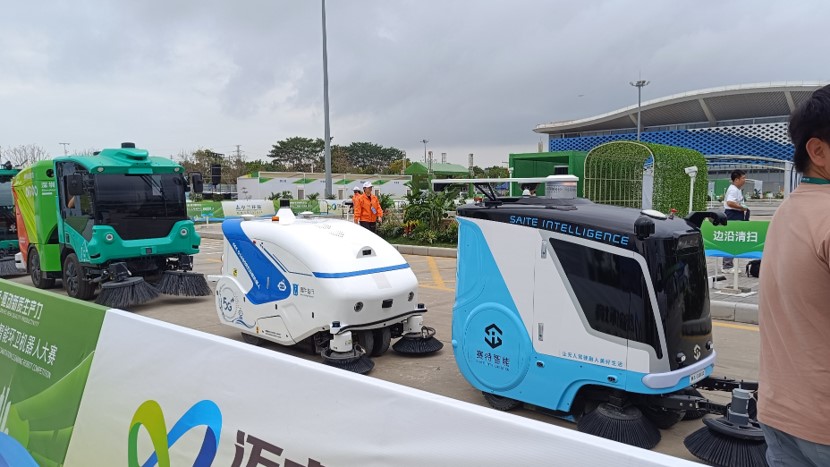
In recent years, low-speed unmanned vehicles have been widely applied in various industries. For instance, in the field of unmanned sanitation cleaning, the first international sanitation robot competition was held in Shenzhen in March 2024, which caused a sensation in the industry. In the field of unmanned logistics/delivery/express delivery, leading enterprises have developed rapidly in the past year, achieving a breakthrough of 1,000 units in quantity. In the field of autonomous buses and unmanned landscape vehicles, relevant departments of local governments have been actively promoting the implementation and application of autonomous vehicles in their regions. At the same time, many leading technology enterprises are launching different types of new products for experimentation and expansion.Overall, the development of the low-speed unmanned vehicle industry can be seen as follows: On the one hand, local governments have continuously increased support for the application of autonomous driving technology, enriching more application scenarios and enabling more advanced technologies to be applied to corresponding products, making technology accessible to the public. On the other hand, autonomous driving has continuously broken through in terms of technology and cost, which also relies on the research and development support and concerted efforts of upstream and downstream enterprises in the industry, promoting the technological development of the overall system.Hertz Innovation has noticed that charging for low-speed unmanned vehicles is an important core aspect. Especially when vehicles have achieved unmanned charging, if a full-scenario unmanned operation is to be created, automatic charging must be realized. It is definitely not desirable to need to send special personnel to plug the charging gun for unmanned vehicles. At the same time, Hertz Innovation has noticed that the main working scenarios of low-speed unmanned vehicles are outdoors, so the adaptability of the charging process to different climate and weather changes in the outdoors needs to be absolutely guaranteed. Therefore, for the main characteristics of automatic charging and outdoor waterproofing, our Hertz Innovation has independently developed and designed a high-power wireless charging system, which is very suitable for low-speed unmanned vehicles. Currently, there are multiple mature application cases in different fields in the industry.Applicable to low-speed unmanned vehicle chassisInnovatively, we have increased the wireless charging sensing distance. Currently, the corresponding model belongs to the industry's longest charging distance of 120mm, which is particularly suitable for the high ground clearance of unmanned vehicle chassis, facilitating flexible deployment by customers and easy installation.Easily cope with outdoor environmentsThe sensing coil and vehicle-end components were designed at the initial planning according to the IP65 high-level waterproof and dustproof standards; for cold regions, a unique charging technology was pioneered to preheat the battery before charging, solving industry problems, and greatly ensuring battery safety and durability, easily coping with various harsh climates such as rain, snow, and cold across the country.Certified by German TÜV RheinlandThrough cooperation with the German TÜV Rheinland Group, we have helped our high-power wireless charging equipment services reach overseas customers and ensure the compliance and safety use of global customers in various regions. This has added a higher dimension of guarantee to our wireless charging products.
2025-07-09
查看详情

Tesla may acquire the wireless charging startup company Wiferion

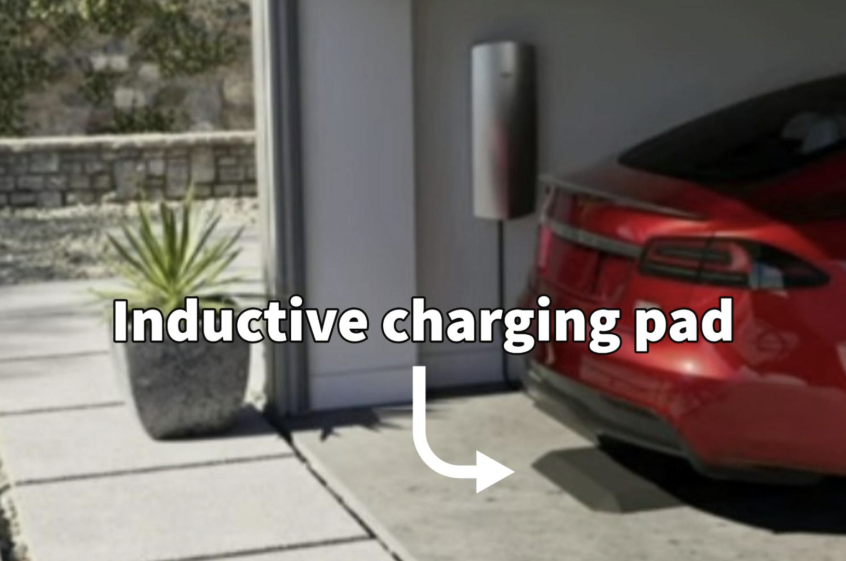
[Source: AutoCar]AutoCar has learned from relevant sources that Tesla may acquire the German wireless charging startup Wiferion recently to develop the wireless charging function for Tesla models.WiTricity is a startup company that attempts to promote the wireless charging concept to automakers. It obtained the license for inductive charging technology from the German startup Wiferion and, after failing to cooperate with its first partner Toyota, WiTricity attempted to sell the inductive charging for cars as an after-sales solution.WiTricity modified a Tesla Model 3 (parameters and inquiries available) and installed a power receiver on it. Simply parking the electric vehicle on the corresponding charging plate enables charging. WiTricity's solution can charge the car at a power of 11 kilowatts. For example, for the Tesla Model 3, a full charge would take 6 hours.For a long time, Tesla has been researching inductive charging solutions. During the investor day on March 1st, Tesla's global charging infrastructure director Rebecca Tinucci proposed a wireless charging solution, but no detailed introduction was given at that time. Combined with the latest acquisition information, Tesla is likely to be interested in WiTricity's solution and decide to directly acquire its technical source - the Wiferion company.Editor's opinion: Wireless charging can be seen everywhere in our daily lives, such as mobile phones, watches, electric toothbrushes, etc. It does bring a convenient charging experience. However, to apply this technology to cars, there seem to be many difficulties. We look forward to Tesla providing a better solution.
2025-07-09
查看详情

Key technologies and urgent research issues to be addressed in static wireless charging for electric vehicles

To promote energy conservation and emission reduction, and to reduce vehicle exhaust emissions and prevent air pollution, electric vehicles (Electric Vehicles, EVs) have become a new type of transportation vehicle that is vigorously promoted by countries around the world. However, due to the limitation of battery capacity, the range of electric vehicles is short, and the charging problem has always been one of the main bottlenecks restricting the development of electric vehicles.With the development of radio energy transmission technology, the static wireless charging technology for electric vehicles based on magnetic coupling has received increasing attention. Compared with the traditional wired charging system, the wireless charging system has no electrical connection and has the advantages of convenient operation, low maintenance cost, waterproof and dustproof, and the ability to achieve a fully automatic charging process.The typical structure of a static wireless charging system for electric vehicles is shown in Figure 1, including power electronic converter, primary compensation network, transmitting coil, receiving coil, secondary compensation network, high-frequency rectification and filtering circuit, and battery load, etc. In recent years, scholars and research institutions at home and abroad have conducted a large amount of research on the static wireless charging technology for electric vehicles based on magnetic coupling.However, as the research progresses, many key problems still need to be solved, such as the system's anti-offset ability, sensitivity to the environment, optimization design of the system structure, and stability control. Currently, the research on static wireless charging technology for electric vehicles is in a stage of overcoming difficulties, and further improvement and application of existing theories, as well as innovative and breakthroughs in principles, are still needed.Based on the current research status of static wireless charging technology for electric vehicles in China and abroad, it can be seen that this technology has been comprehensively studied in all aspects, but there are still many problems to be solved. The main manifestations are as follows:(1) The anti-offset ability of the systemHow to improve the anti-offset ability of the system has always been a research hotspot in the field of wireless charging for electric vehicles. In practical applications, due to the influence of the user's parking position, the relative position of the primary and secondary coils in the system will change within a certain range, causing a change in the coupling coefficient, which requires the system to have a strong anti-offset ability.Currently, methods such as the design of magnetic coupling mechanisms or system closed-loop control are mainly used to improve the anti-offset ability of the system, but these technical approaches have limited improvement effects. Therefore, it is necessary to seek breakthroughs from the mechanism. The radio energy transmission technology based on the parity-time symmetry (Parity-Time Symmetry, PTS) principle can achieve a constant output power and efficiency within a certain range, independent of the coupling coefficient. In addition, the radio energy transmission technology based on fractional-order circuits also shows excellent characteristics and can be applied to electric vehicle wireless charging, which is expected to further enhance the anti-offset ability of the system.
2025-07-09
查看详情

What are the technologies for wireless charging of electric vehicles?

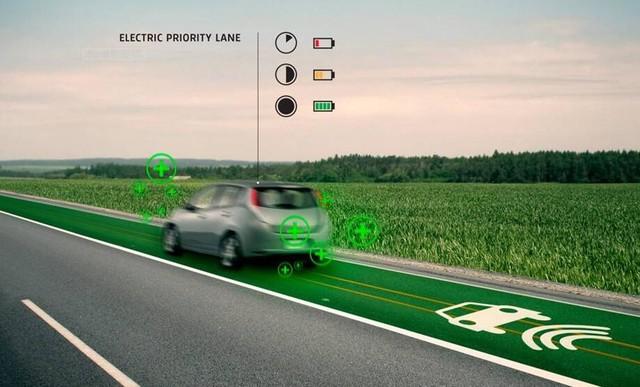
Although the actual implementation of wireless charging technology for cars is not yet available, various automotive companies and other organizations are currently conducting research on this technology. Do you know what types of wireless charging technologies exist for cars?1. Static Wireless ChargingStatic wireless charging technology charges the car when it is stationary. Due to its characteristics, it is typically suitable for parking lots in shopping malls or residential areas.Radiative radio energy transmission technology transmits energy through far-field transmission, mainly including radio wave and laser methods. It is suitable for long-distance wireless power transmission. Due to its low efficiency and small power characteristics, it has not yet matured.2. Dynamic Wireless Charging TechnologyDynamic wireless charging technology for electric vehicles mainly transmits electrical energy to the vehicle's receiving end power pickup mechanism within a certain range on the ground through underground power supply rails buried beneath the ground, in the form of high-frequency alternating magnetic fields.This then supplies power to the on-board energy storage device, allowing the electric vehicle to carry a small battery pack and extend its range. At the same time, the power supply becomes safer and more convenient.3. Magnetic ResonanceMagnetic resonance charging technology achieves energy transfer through the principle of energy resonance coupling. Based on the structure of the electric vehicle system using magnetic resonance, the alternating current delivered from the power supply end goes through processes such as rectification, filtering, and high-frequency inverter circuit, and is converted into high-frequency alternating current to achieve the optimal energy transmission conditions for the circuit.4. Charging During DrivingThe wireless charging sending device needs to be laid on fixed sections of road. During the driving of the electric vehicle on this section, it can receive power through the sending device of the charging system. This allows for rapid charging within a short period of time, enabling the car to replenish energy while in motion, demonstrating the dynamic system function of charging at any time.
2025-07-09
查看详情

Research achievements and industrial status of static wireless charging technology for electric vehicles at home and abroad

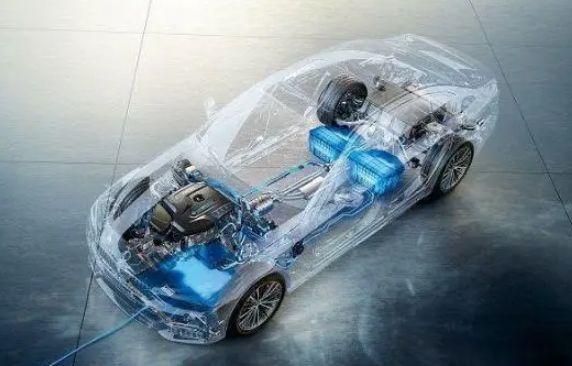
At present, the research on static wireless charging systems for electric vehicles by domestic and foreign universities and research institutions is mostly at the engineering prototype stage. Major enterprises focus on providing solutions. There are still many problems to be solved in the industrialization and commercialization process of electric vehicle wireless charging technology.The research on electric vehicle wireless charging products should rely on the latest scientific research achievements, strengthen the organic combination of industry-university-research, make full use of the cutting-edge core technologies mastered by major universities and research institutions, and exert the role of enterprises as the innovation entities to promote the transformation of scientific research results. This will help the commercialization process of static wireless charging technology for electric vehicles.1. Foreign Research Results and Industrial StatusThe universities and research institutions conducting research on static wireless charging technology for electric vehicles in foreign countries mainly include: Auckland University of New Zealand, Korea Advanced Institute of Science and Technology (KAIST), Oak Ridge National Laboratory (ORNL) of the United States, Utah University of the United States, Michigan University of the United States, Saitama University of Japan, and Tokyo University of Japan, etc.The research mainly focuses on system modeling and control, magnetic coupling mechanism, compensation topology, anti-offset ability, electromagnetic leakage, and shielding, etc.Among them, the research team of Auckland University has done a lot of work in the research of magnetic coupling mechanism and proposed a series of novel coil structures, effectively improving the performance of the magnetic coupling mechanism, and established a deep cooperation with Qualcomm Halo Company to develop a series of products;The team of Korea Advanced Institute of Science and Technology in 2014 achieved a transmission power of 6.6kW at a 20cm transmission distance, with an overall efficiency of 95.57%, and proposed a coupling mechanism of large and small coils in the same year, greatly improving the anti-offset ability of the system, and applying the large and small coils to the wireless charging system of 5-15kW;After successfully developing a 20kW electric vehicle wireless charging system in 2016, Oak Ridge National Laboratory of the United States announced the realization of a 120kW high-power wireless charging system in 2018, with an efficiency as high as 97%; The team of Professor Chris Mi of Michigan University of the United States in 2015 proposed a bilateral LCC compensation topology structure for electric vehicles, achieving decoupling of output current and load, and this topology has been widely applied.In addition, many foreign companies and enterprises such as Qualcomm Halo, Evatran, Momentum Dynamics, WiTricity, HEVO POWER, ELIX of Canada, and Bombardier have also invested a large amount of financial and material resources in the research of electric vehicle wireless charging technology.Among them, the Halo system of Qualcomm Company has achieved output power of 3.3-20kW, with an overall efficiency greater than 90%; The wireless charging system Drive 11 of WiTricity Company for pure electric vehicles and hybrid vehicles can provide a maximum output power of 11kW, with an efficiency of up to 93%, and in 2018, it cooperated with BMW Company to launch the world's first factory-equipped vehicle with wireless charging function - BMW 530e iPerformance, with a charging power of 3.6kW.The ELIX Company of Canada has achieved an output power of 7.7kW using magnetic power coupling MDC technology; The PLUGLESS wireless charging system proposed by Evatran Company has also achieved power transmission of 3.6kW and 7.2kW, with device pricing of $5999 and $12999 respectively, and provides wireless charging support for Tesla Model S, BMW I3, Nissan LEAF, Chevrolet Volt and other models.The Momentum Wireless Charging System proposed by Momentum Dynamics Company can achieve a maximum output power of up to 200kW and an efficiency of 95%. It has successfully been applied to the wireless charging of electric buses in collaboration with the American Link Transit Company. Additionally, on February 11, 2019, WiTricity Company announced the acquisition of some technical platforms and intellectual property from Qualcomm Halo Company. Previously, Qualcomm and WiTricity Company had been collaborating with international standard organizations. This acquisition will facilitate the standardization of the standards and accelerate the commercialization of wireless charging for electric vehicles. Overall, major related enterprises abroad in the field of wireless charging for electric vehicles are at a relatively advanced level and have also made certain commercialization attempts.
2025-07-09
查看详情