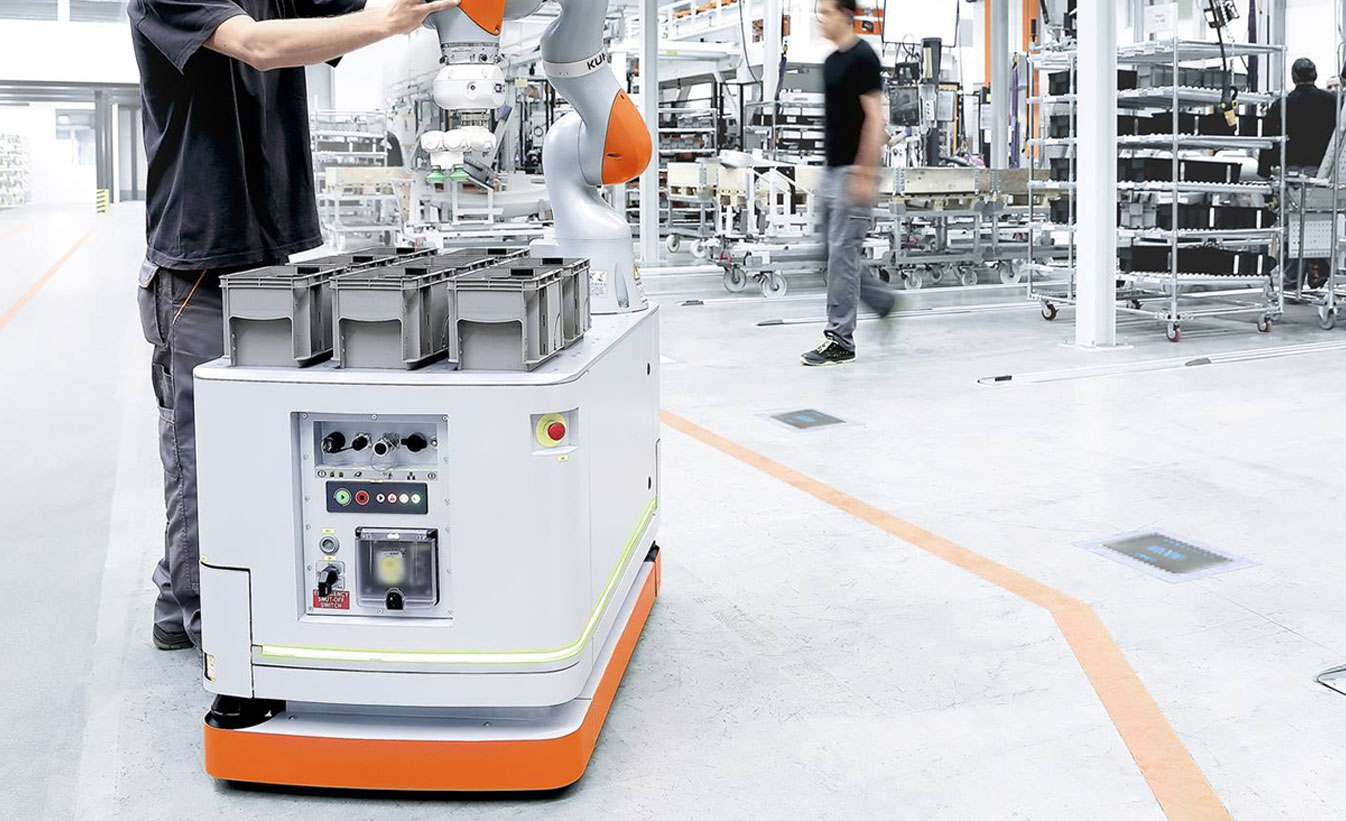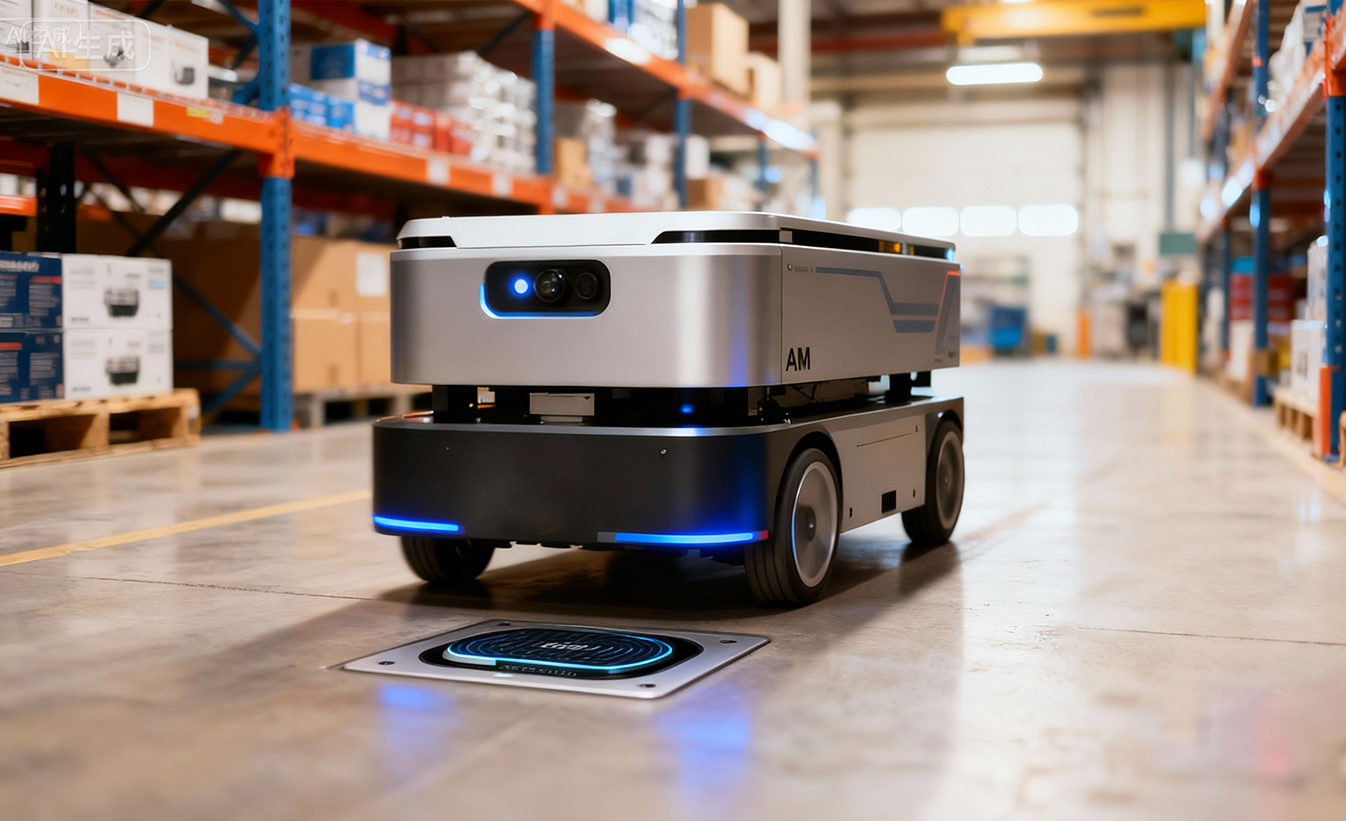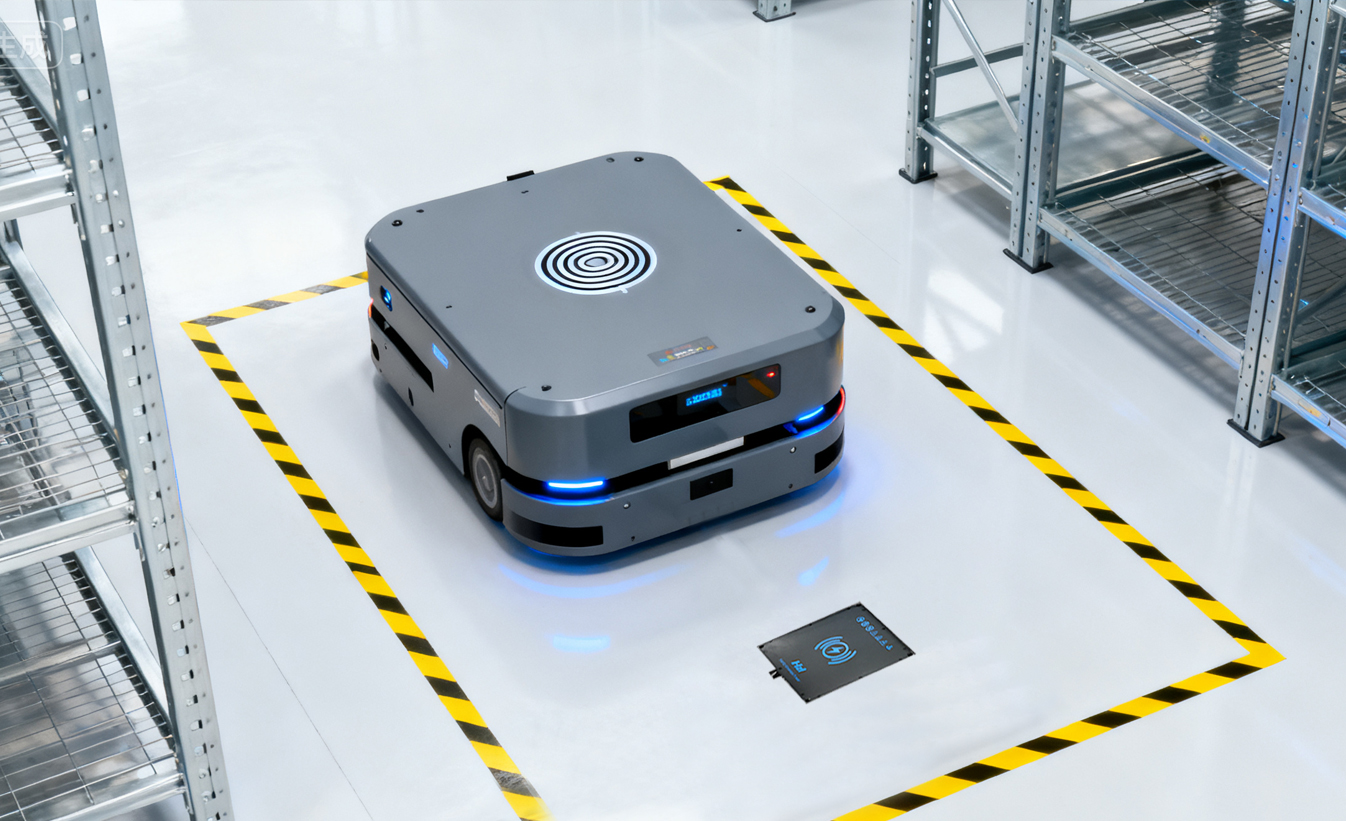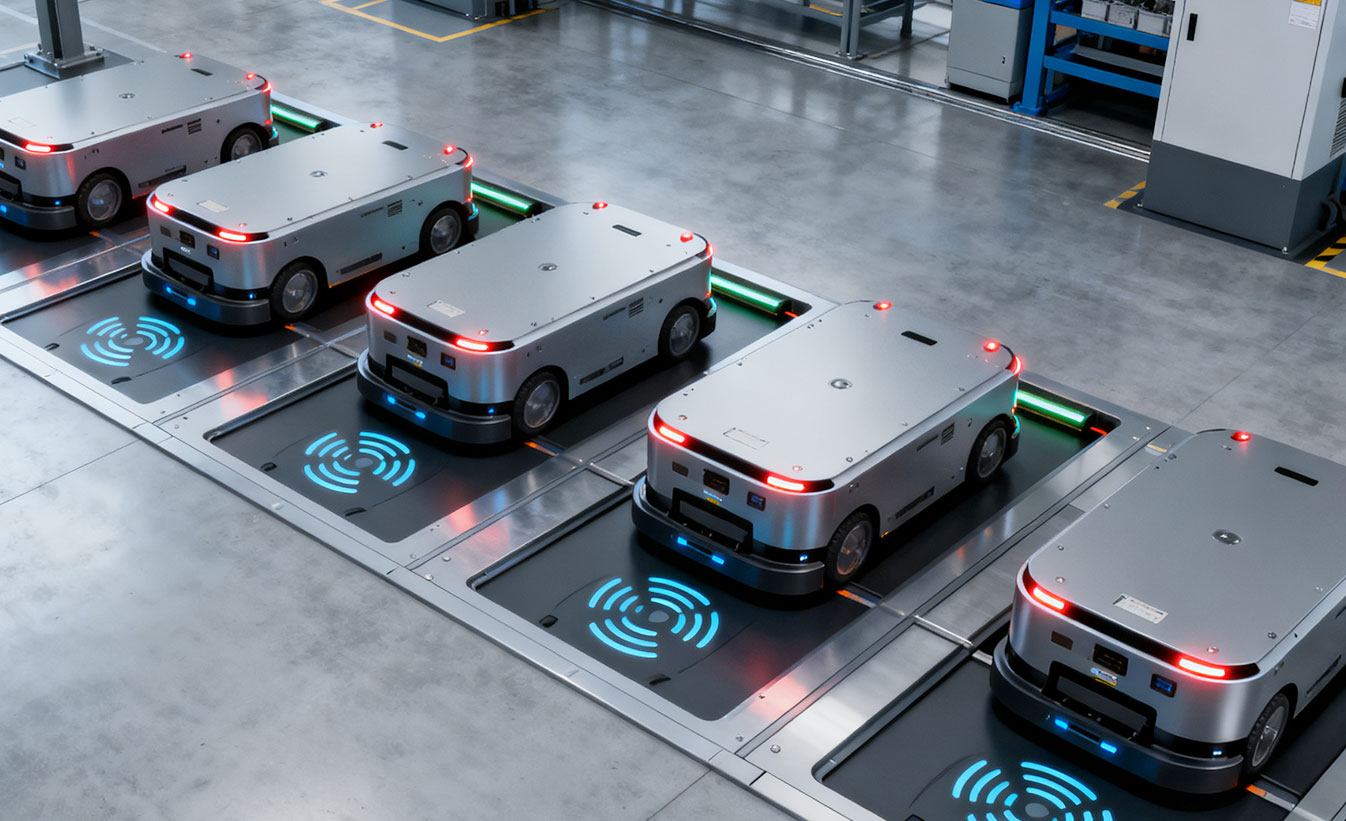
For AGVs and AMRs that require high-frequency, high-availability operation in warehousing, logistics, and manufacturing workshops, wireless charging technology offers highly automated, highly reliable, low-maintenance, and efficient charging capabilities, significantly enhancing the overall performance and cost-effectiveness of material handling systems. It not only overcomes many limitations of traditional charging methods but also serves as a key infrastructure for flexible production and smart logistics. With large-scale adoption and technological iteration, wireless charging has become the ideal energy supplement solution for modern AGV/AMR systems.

Without the need for precise alignment with charging ports, AGVs only need to stop roughly within the transmitter coil area to establish a charging connection, improving system robustness and success rates.
AGVs/AMRs can autonomously navigate to the charging area for automatic energy replenishment without human intervention, supporting true 24/7 uninterrupted operation.
Supports fragmented charging sessions, allowing short charging periods during idle times such as task intervals or loading/unloading waits, achieving "charge as you stop" and greatly improving equipment availability and task continuity.
Traditional contact charging stations require frequent plugging and unplugging, which can cause plug burning, deformation, and poor contact. Wireless charging completely avoids mechanical friction and electrical sparks.
The transmitter and receiver can use a fully sealed structure, unaffected by dust, oil, humidity, and other common industrial environment interference, making it especially suitable for food, pharmaceutical, and chemical industries.
Fundamentally eliminates risks of accidental human contact, arc discharge, or short circuits, complying with international safety standards such as CE and UL.
No exposed cables in the charging area, preventing risks of AGVs pulling or tangling wires during movement, ensuring safety in mixed human-vehicle environments.
The non-contact design greatly reduces failure rates, avoiding downtime and repair costs caused by socket damage or cable aging.
No need for personnel to manually plug or unplug charging, saving the cost of dedicated high-voltage wiring and protective equipment for charging stations.
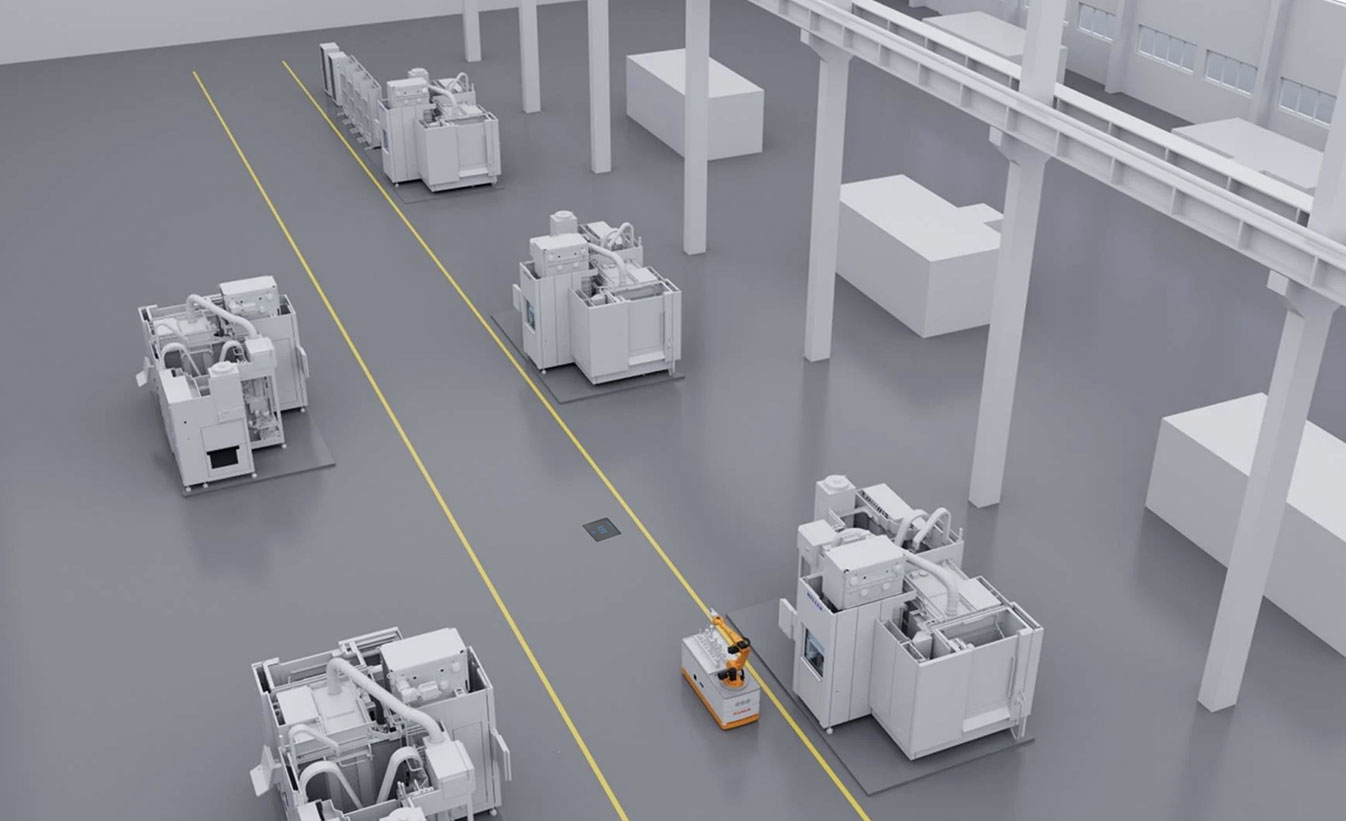
Charging points can be flexibly deployed, quickly adding charging positions at key nodes according to work rhythms and logistics paths without civil construction, and can be moved as conveyor layouts change.
Seamlessly integrates with scheduling systems, supporting real-time energy management and strategy optimization. The system can intelligently determine charging timing based on battery levels and task queues to achieve energy efficiency optimization.